
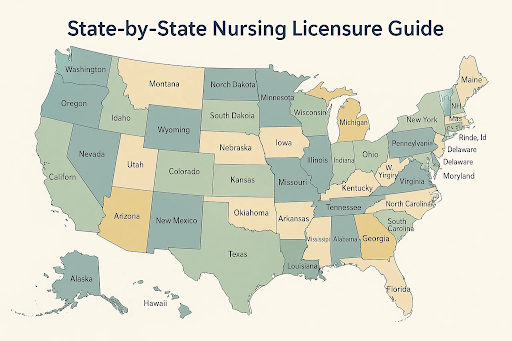
Becoming a nurse is driven by a passion for helping people, but before you can start your first shift, you have to navigate the state-specific maze of licensure. It’s a process that often feels more about paperwork than patient care, and it can be surprisingly different depending on where you live.
This guide cuts through the confusion, offering a clear roadmap to understand and secure your nursing license, no matter your state. And for when the journey gets tough, Uloscah.com is there with the tools and support to help you succeed, from exam prep to application guidance.
Why Nursing Licensure Varies by State
Did you know that the requirements to become a licensed nurse aren’t the same across the U.S.? Each state has its own Board of Nursing that sets unique rules, regulations, and eligibility standards for licensure.
These variations exist because nursing practice is shaped by state laws, healthcare demands, and regulatory priorities. While some states have a streamlined process, others may require additional steps such as background checks, continuing education, or specific coursework.
Nursing License Requirements by State
The National Council of State Boards of Nursing (NCSBN) sets national standards for obtaining and renewing a nursing license. These standards generally include:
- Graduation from an approved nursing program
- Passing the NCLEX exam (RN or PN)
- Proof of English language proficiency
- Disclosure of any criminal history or substance use concerns
However, each state’s Nursing Practice Act outlines its own licensing rules. This means requirements can vary when it comes to application fees, background checks, clinical experience, continuing education (CEU) hours, and even whether a program must be nationally accredited or just state-approved.
Below, all 50 states:
Alabama, Alaska, Arizona, Arkansas, California, Colorado, Connecticut, Delaware, District of Columbia, Florida, Georgia, Hawaii, Idaho, Illinois, Indiana, Iowa, Kansas, Kentucky, Louisiana, Maine, Maryland, Massachusetts, Michigan, Minnesota, Mississippi, Missouri, Montana, Nebraska, Nevada, New Hampshire, New Jersey, New Mexico, New York, North Carolina, North Dakota, Ohio, Oklahoma, Oregon, Pennsylvania, Rhode Island, South Carolina, South Dakota, Tennessee, Texas, Utah, Vermont, Virginia, Washington, West Virginia, Wisconsin, Wyoming’
>>>Check out HESI Fundamentals<<<
Key Steps to Obtaining Nursing Licensure
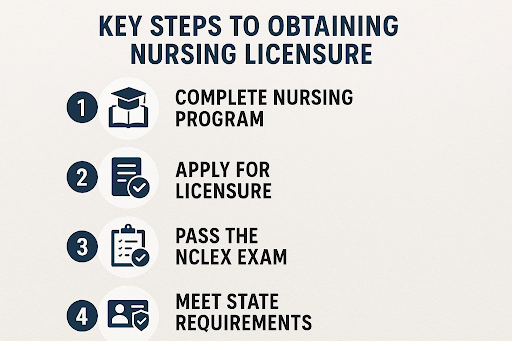
Whether you’re a recent nursing graduate or transferring your license to a new state, the steps are fairly consistent:
Education Requirements
Every state requires completion of an accredited nursing program. Options include:
- Associate Degree in Nursing (ADN)
- Bachelor of Science in Nursing (BSN)
- Diploma programs (depending on career goals)
Many schools now offer online nursing programs, perfect for working students or parents. Just be sure the program is state-approved by your nursing board before enrolling.
The NCLEX Exam
Passing the NCLEX is essential—whether the NCLEX-RN for Registered Nurses or NCLEX-PN for Practical Nurses.
- Didn’t pass on your first attempt? Most states allow retakes after a short waiting period (rules vary, e.g., Texas has specific retake policies).
- Preparing for the NCLEX? Uloscah.com offers expert-designed practice questions, study guides, and exam strategies so you’ll feel confident walking into test day.
Background Check & Fingerprinting
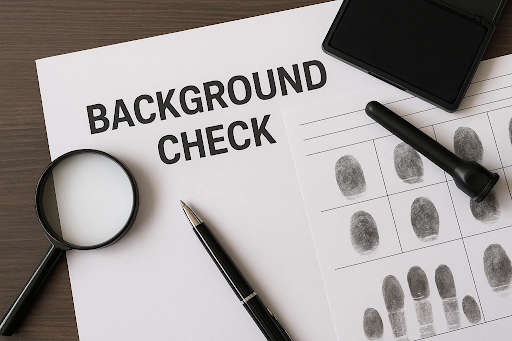
Nearly every state requires a background check and fingerprinting. Nursing boards want to ensure license holders are trustworthy and safe to practice.
International Nurse Requirements
If you trained outside the U.S., you’ll need to:
- Submit a credential evaluation to confirm your education matches U.S. standards
- Take an English proficiency exam (such as TOEFL) if required
- Meet state-specific rules (e.g., Texas requires additional documentation for international applicants)
Compact Licensure & Multi-State Practice
The Nurse Licensure Compact (NLC) allows nurses to practice in multiple participating states with one license—perfect for travel nurses or those moving frequently.
Eligibility Requirements:
- Declare a primary residence in a compact state
- Hold an active nursing license in that state
Application Process:
- Complete the application (usually online)
- Provide proof of residency (driver’s license, tax records)
- Submit background check results & fees
Once approved, you’ll hold a multistate license valid across all compact states.
>>>See also aDN vs. BSN: Which Is Right for You<<<
State-Specific Licensing Differences
Compact States
If your home state is part of the Nurse Licensure Compact, you can practice in multiple states without extra applications. States like Texas, Arizona, and Florida are compact states.
States with Unique Requirements
Some states—like California—require additional steps such as:
- Extra CEU hours
- Criminal background reviews
Always check your state board of nursing for exact requirements before applying.
Keeping Your Nursing License Active
- Continuing Education (CEUs):Most states require CE hours every 2–3 years. Online CEU courses make it easy to stay compliant.
- License Renewal: Renewal cycles vary but typically occur every 2–3 years. Missing deadlines can result in fines or a lapse in license status.
Common Mistakes to Avoid
- Not researching state-specific rules (fees, deadlines, and paperwork vary)
- Missing deadlines for applications, renewals, or exams
- Failing to confirm CEU requirements
Nursing Licensure by State: FAQs
Can I Transfer My RN License to Another State?
Yes—via license endorsement, though some states may require additional documentation.
Do I Need a Nursing License to Work as a CNA?
No—CNAs require separate certification, not an RN or LPN license.
Which State Is Easiest to Get an RN License?
States like Georgia, Alabama, Hawaii, South Carolina, and Kentucky are known for faster processing times.
What if I Fail the NCLEX?
You can retake it after a waiting period, but rules vary by state.
Can I Hold a Nursing License in All 50 States?
No. The NLC covers many states, but not all.
Resources for Aspiring Nurses
- Uloscah.com – Your all-in-one NCLEX prep platform with practice tests, flashcards, and study guides.
- State Boards of Nursing – The official source for requirements, deadlines, and applications.
- Online NCLEX Prep Courses – Structured study plans and realistic practice exams.
- Local Libraries & Community Resources – Free access to textbooks, workshops, and study groups.
Final Thoughts
Getting your nursing license may feel overwhelming, but with the right resources, it’s completely manageable. From education requirements to the NCLEX exam and state-specific rules, preparation is key.
Leverage tools like Uloscah.com to stay on track, study smarter, and pass with confidence. With the right plan, you’ll be holding your nursing license—and starting your career—sooner than you think.