

DNP Programs in Maine – Your Path to Doctoral Nursing Practice
The Doctor of Nursing Practice (DNP) represents the terminal degree for clinical nursing practice, preparing nurses for the highest level of evidence-based clinical practice, healthcare leadership, and systems innovation.
As Maine’s healthcare landscape evolves with increasing complexity and critical workforce shortages, pursuing a DNP positions you at the forefront of healthcare transformation.
Whether you’re exploring online DNP programs accessible to Maine nurses, researching post-MSN pathways, or considering BSN-to-DNP options, this comprehensive guide examines DNP education opportunities for Maine nursing professionals.
At uloscah.com, we recognize that doctoral nursing education demands exceptional preparation and sustained excellence. Our platform provides comprehensive nursing exam resources supporting graduate and doctoral nursing students through advanced coursework and certification examinations.
>>>Read DNP programs in Georgia<<<
Test Banks
- ATI NUR 213 Midpoint Assessment
- ATI NUR 250 Summer 1 2025 Midpoint Assessment
- ATI Nursing 130 Exam 2
- ATI Nursing 531 Exam
- ATI Nutrition Practice Exam
- ATI Ped Unit 1 Assessment Fall
- ATI PED Unit 3 Assessment
- ATI Pharmacology Exam
- ATI PN Comprehensive Predictor
- ATI RN Adult Medical Surgical Exam
- ATI RN Fundamentals Exam
- ATI RN Maternal Newborn
Understanding DNP Programs
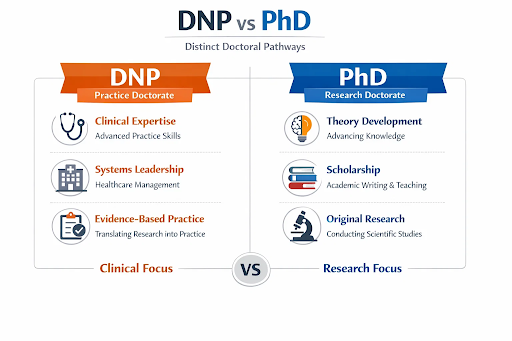
The Doctor of Nursing Practice is a practice-focused doctoral degree distinct from the research-focused PhD in Nursing.
DNP Focus:
- Advanced clinical practice expertise
- Healthcare systems leadership
- Evidence-based practice implementation
- Quality improvement and patient safety
- Healthcare policy and advocacy
- Population health management
- Organizational and systems leadership
PhD in Nursing Focus:
- Original research and theory development
- Generation of new nursing knowledge
- Research methodology and design
- Academic and research scientist careers
Choose DNP if you want: Advanced practice roles, healthcare leadership, executive positions, clinical teaching, or systems improvement
Choose PhD if you want: Research careers, theory development, academic positions focused on scholarship, or nurse scientist roles
>>>See also DNP programs in California<<<
Why Pursue a DNP?
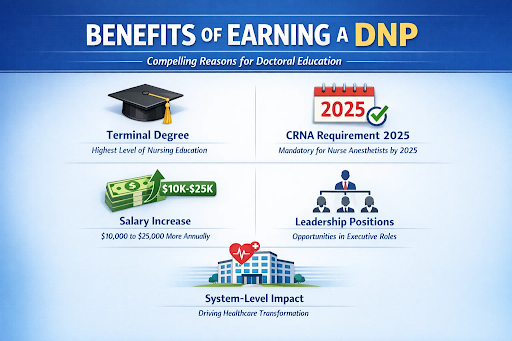
Terminal Practice Degree: Highest level of nursing practice education
Mandatory for CRNAs: Nurse anesthesia certification requires DNP by 2025 (grandfathered for existing CRNAs)
Career Advancement: Qualifies for executive nursing positions, faculty roles, and advanced practice leadership
Salary Premium: DNP-prepared nurses earn $10,000-$25,000 more annually than MSN colleagues
Full Practice Authority: Enhanced credibility for independent practice in Maine
Healthcare Leadership: Prepare to lead transformation, policy development, and quality improvement
System-Level Impact: Move beyond individual patient care to improve entire healthcare systems and populations
>>>Read DNP programs in Arizona<<<
DNP Programs Available to Maine Nurses
Maine has limited in-state DNP programs, but Maine nurses can access quality DNP education through regional and online options.
University of New England DNP Programs
UNE offers Maine’s primary DNP programs with multiple specializations and entry points.
DNP Program Pathways:
Post-BSN to DNP: Combined MSN and DNP education in single pathway
- Duration: 4-5 years part-time
- Includes advanced practice clinical training
- Multiple specializations available
- Comprehensive preparation for APRN certification and doctoral practice
Post-MSN to DNP: For nurses with MSN degrees seeking terminal practice degree
- Duration: 2-3 years part-time
- Focus on systems leadership and evidence-based practice
- Scholarly project addressing practice problem
- Typically 30-36 credit hours
DNP Specializations:
- Family Nurse Practitioner
- Psychiatric Mental Health Nurse Practitioner
- Nursing Leadership and Healthcare Systems Management
- Population Health
Program Features:
- Primarily online delivery with campus intensives
- Biddeford campus for intensives
- Clinical placements throughout Maine and New England
- Strong interprofessional education focus
- Emphasis on rural and underserved populations
- Scholarly project with faculty mentorship
Admission Requirements:
- BSN from accredited program (post-BSN track) with minimum 3.0 GPA
- MSN from accredited program (post-MSN track) with minimum 3.2 GPA
- Active Maine or compact state RN license
- National certification (for post-MSN APRNs)
- Two years clinical experience preferred
- GRE may be required
- Three professional references
- Scholarly writing sample
- Goal statement
- Interview
Tuition (approximate):
- Private institution: $680-$730 per credit hour
- Post-MSN DNP total: $20,000-$26,000
- Post-BSN DNP total: $65,000-$85,000
- Financial aid and payment plans available
Contact:
- Website: une.edu/dnp
- Phone: (207) 221-4225
- Location: Biddeford, ME
University of Southern Maine – Future DNP Plans
USM is developing DNP programs to serve Maine’s nursing workforce needs. Check their website for current offerings and updates.
Contact:
- Website: usm.maine.edu/nursing
- Phone: (207) 780-4130
>>>Check out DNP programs in Alabama<<<
Online DNP Programs for Maine Nurses
Since Maine has limited in-state DNP options, many Maine nurses pursue online DNP programs from accredited national institutions.
Top Online DNP Programs Serving Maine
Frontier Nursing University:
- Pioneered distance DNP education
- Post-MSN DNP pathway
- Specializes in rural healthcare
- Family Nurse Practitioner
- Nurse-Midwifery
- Women’s Health Nurse Practitioner
- Psychiatric Mental Health NP
- Flexible, asynchronous format
- Kentucky-based with Maine student support
Chamberlain University:
- Multiple DNP specializations
- Post-MSN and BSN-to-DNP pathways
- Family Nurse Practitioner
- Psychiatric Mental Health NP
- Executive Leadership
- Clinical placements arranged in Maine
- Multiple start dates annually
- Comprehensive DNP offerings
- Post-master’s DNP
- Multiple specializations
- Flexible online format
- Strong student support services
- Healthcare management focus
- Post-master’s DNP
- Multiple start dates
- Fully online except local clinical
- New England-based serving Maine
MGH Institute of Health Professions:
- Boston-based program accessible to southern Maine
- Post-master’s DNP
- Strong clinical partnerships
- Hybrid format
Important Selection Criteria
- CCNE or ACEN accreditation verification
- Clinical placement support in Maine
- Faculty qualifications and accessibility
- Scholarly project mentorship quality
- Graduation and certification pass rates
- Total program costs
- Time to completion flexibility
>>>Check Nursing Licensure By State<<<
DNP Curriculum
DNP programs build upon MSN-level knowledge with advanced coursework.
Core DNP Coursework:
Scientific Foundations (BSN-to-DNP students):
- Advanced pathophysiology
- Advanced pharmacology
- Advanced health assessment
Organizational and Systems Leadership:
- Healthcare policy and advocacy
- Financial management and economics
- Organizational leadership and change management
- Healthcare informatics and technology
- Strategic planning
Quality Improvement and Patient Safety:
- Quality improvement methodologies
- Patient safety science
- Evidence-based practice and translation science
- Healthcare outcomes evaluation
- Performance improvement
Research and Scholarship:
- Research methods and design
- Data analysis and interpretation
- Epidemiology and population health
- Implementation science
- Program evaluation
DNP Scholarly Project
Capstone of DNP education addressing significant practice problem:
- Identify healthcare practice problem
- Comprehensive literature review
- Design evidence-based intervention
- Implement and evaluate intervention
- Disseminate findings
- Demonstrate measurable impact
Project Examples:
- Reducing hospital readmissions in rural Maine
- Implementing telehealth for behavioral health access
- Developing care coordination model for aging populations
- Creating nurse-led quality improvement initiative
- Evaluating APRN practice patterns in underserved areas
Clinical Hours:
- Post-MSN DNP: 500-1,000 additional hours
- BSN-to-DNP: 1,000+ total hours
- Focus on leadership, systems, and population health
- Completed in various settings throughout Maine
Admission Requirements
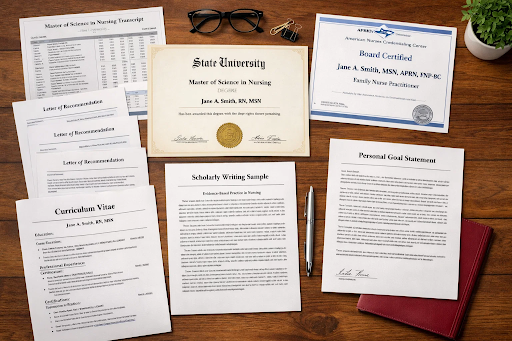
Standard DNP Requirements:
Educational Background:
- MSN from CCNE or ACEN-accredited program (post-MSN)
- BSN from accredited program (BSN-to-DNP)
- Minimum GPA 3.0-3.2
- Prerequisite statistics course
Professional Experience:
- Active RN license in good standing
- Current national certification (post-MSN APRNs)
- Clinical practice experience (typically 2+ years)
- Leadership experience preferred
Application Materials:
- Completed online application
- Official transcripts from all institutions
- Current CV/resume
- Goal statement (750-1,000 words)
- Three professional letters of recommendation
- Scholarly writing sample
- Interview (most programs)
- GRE scores (many programs waive)
>>>Check out RN to BSN programs in Maine<<<
Financial Considerations
DNP Program Costs:
University of New England:
- Post-MSN: $20,000-$26,000 total
- Post-BSN: $65,000-$85,000 total
Online Programs:
- Typically $25,000-$50,000 (post-MSN)
- $60,000-$90,000 (BSN-to-DNP)
Additional Costs:
- Books and resources: $1,500-$3,000
- Clinical expenses: $500-$1,500
- Professional conferences: $1,000-$2,000
- Technology requirements: $500-$1,000
Financial Aid
Federal Aid:
- Complete FAFSA
- Graduate Direct Unsubsidized Loans
- Grad PLUS loans
Scholarships:
- Jonas Scholars Program (DNP students)
- Specialty nursing organization scholarships
- University-specific doctoral scholarships
- Maine nursing scholarships
Employer Assistance:
- Northern Light Health
- MaineHealth system
- Central Maine Healthcare
- Many offer $2,000-$5,000 annually
Maine Loan Repayment:
- Maine Rural Health Loan Repayment Program
- NURSE Corps Loan Repayment (up to $50,000)
- National Health Service Corps
Return on Investment:
- Salary increase: $10,000-$25,000 annually
- Enhanced career opportunities
- Leadership position access
- Academic appointment eligibility
- Typical ROI: 3-5 years
>>>Check out MSN programs in Maine<<<
Career Outcomes for DNP Graduates
Advanced Practice Roles:
- Nurse Practitioner (enhanced credentials)
- Clinical Nurse Specialist
- Certified Nurse-Midwife
- Certified Registered Nurse Anesthetist
Leadership Positions:
- Chief Nursing Officer (CNO)
- Director of Nursing
- Vice President of Patient Care Services
- Healthcare System Administrator
- Clinical Director
Academic Careers:
- Nursing Faculty (clinical track)
- DNP Program Director
- Clinical Coordinator
- Simulation Director
Specialized Roles:
- Quality Improvement Director
- Patient Safety Officer
- Healthcare Consultant
- Policy Analyst
- Clinical Researcher
Maine Salary Expectations:
DNP-Prepared Nurse Practitioners:
- $110,000-$125,000 (vs. $100,000-$115,000 MSN)
DNP Administrators:
- $115,000-$140,000 (vs. $85,000-$110,000 MSN)
DNP Faculty:
- $80,000-$105,000
Certified Nurse Anesthetists (DNP):
- $160,000-$180,000
>>>Read BSN programs in Maine<<<
DNP Programs in Maine: FAQs
What DNP Programs Are Available in Maine?
University of New England offers Maine’s primary DNP programs with post-MSN and post-BSN pathways in Family Nurse Practitioner, Psychiatric Mental Health NP, and Nursing Leadership. The University of Southern Maine is developing DNP programs. Many Maine nurses pursue accredited online DNP programs from Frontier Nursing University, Chamberlain, Walden, Regis College, and MGH Institute serving Maine nurses with clinical placement support.
How Long Does a DNP Program Take?
Post-MSN DNP programs typically take 2-3 years part-time (4-6 semesters). BSN-to-DNP programs take 4-5 years part-time as they include MSN and DNP coursework. UNE’s post-MSN DNP takes approximately 2-3 years for working nurses. Full-time enrollment can shorten timelines but is less common for practicing nurses.
Can I Work While Completing a DNP Program?
Yes, most DNP programs are designed for working nurses with primarily online coursework and flexible scheduling. Part-time enrollment allows full-time employment throughout the program. Many DNP students work full-time while balancing studies and scholarly projects. Clinical practicum hours can often be completed in your workplace, making employment feasible.
How Much Does a DNP Program Cost in Maine?
UNE’s post-MSN DNP costs approximately $20,000-$26,000 total for Maine residents. Post-BSN DNP programs cost $65,000-$85,000. Online programs from national institutions typically cost $25,000-$50,000 (post-MSN) or $60,000-$90,000 (BSN-to-DNP). Financial aid, scholarships, employer assistance, and Maine loan repayment programs can significantly reduce costs.
Is a DNP Required to Be a Nurse Practitioner in Maine?
No, a DNP is not currently required to practice as a nurse practitioner in Maine. An MSN with nurse practitioner specialization and national certification is sufficient for Maine APRN licensure. However, DNP is mandatory for nurse anesthesia certification by 2025 (with grandfathering). Many healthcare systems prefer DNP-prepared NPs for leadership roles, and the profession trends toward DNP as entry-level.
Conclusion
Pursuing DNP programs positions you at the pinnacle of nursing practice, preparing you for healthcare leadership, advanced clinical roles, and systems-level innovation in Maine. Whether you choose University of New England’s comprehensive programs or accredited online DNP programs accessible to Maine nurses, doctoral nursing education represents a transformative investment in your professional future.
Maine’s full practice authority for APRNs, rural health focus, and loan repayment opportunities make it an excellent state for doctorate-prepared nurses. Success requires commitment and scholarly rigor, and uloscah.com provides comprehensive exam resources supporting doctoral nursing students through certification examinations.
Research DNP programs, explore financial aid, and visit uloscah.com for resources supporting your doctoral journey. Your future as a doctorate-prepared nurse leader in Maine begins now.