
Alabama’s MSN programs open the door to advanced practice and leadership opportunities for nurses ready to grow in their profession. With flexible formats, supportive faculty, and strong clinical partnerships, these programs make it possible to balance your studies with real-life responsibilities.
Whether your goal is to become a Nurse Practitioner, Nurse Educator, or Nurse Executive, Alabama offers respected options that can help you reach your career goals.
Success in graduate nursing education also comes from being well-prepared at every stage.
That’s where Uloscah.com can help—offering NCLEX prep tools, practice exams, and study guides designed to keep nursing students confident and focused. Pairing the right program with the right resources means you’ll be ready to step into advanced nursing roles with skill and confidence.
>>>Check out Nursing Licensure By State<<<
Why Consider Alabama for Your MSN?
Alabama isn’t just about southern charm—it’s a place where nursing students find the right balance of affordability, flexibility, and opportunity. Here are some reasons students choose Alabama for graduate nursing:
- Strong nursing schools with programs recognized nationwide.
- Flexible formats (online, hybrid, traditional) to fit work and family life.
- Affordable tuition and living costs, making it easier to invest in your future.
- A growing job market with demand for advanced practice nurses across the state.
- Supportive learning communities that help students succeed both in and out of the classroom.
With the right mix of support and opportunity, Alabama sets the stage for a rewarding MSN journey.
Leading Universities Offering MSN Programs in Alabama
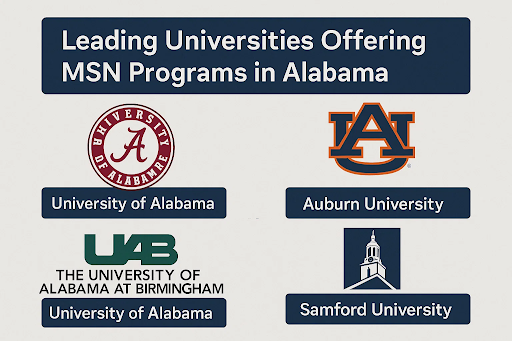
Here’s a closer look at the top schools offering MSN degrees in the state:
The University of Alabama (UA)
- Specializations: Nurse Executive, Nurse Educator, Nurse Practitioner
- Format: Flexible online options, full-time or part-time
- Tuition: $480/credit (residents); $1,345/credit (non-residents); Distance learning $440/credit
- Highlights: Rigorous academics with strong alumni and professional networks; ideal for students balancing school with work.
University of South Alabama (USA)
- Specializations: Nurse Practitioner, Nurse Educator, Nurse Leadership
- Format: 100% online with doctoral-level coursework built in
- Tuition: $594/credit
- Highlights: Prepares students for leadership with an innovative online design. Flexible enough for working nurses.
University of Alabama at Birmingham (UAB)
- Specializations: Nurse Midwifery, Nurse Practitioner, Health Systems Leadership, Accelerated MSN
- Format: Online with some on-campus requirements
- Tuition: $541/credit (residents); $1,505/credit (non-residents) + $250 online course fee
- Highlights: Known for clinical excellence and strong placements; accelerated pathways available.
University of North Alabama (UNA)
- Specializations: Nursing Education, Nursing Leadership, FNP, PMHNP
- Format: Mostly online
- Tuition: $495/credit (residents); $990/credit (non-residents)
- Highlights: Flexible, supportive environment with individual attention for students.
Auburn University
- Specializations: Nurse Educator, Primary Care NP
- Format: Hybrid (online + in-person sessions)
- Tuition: $612/credit (same for residents and non-residents)
- Highlights: Strong emphasis on hands-on learning with on-campus clinical experiences.
Popular Specializations in Alabama MSN Programs
- Nurse Practitioner (NP): High demand in Alabama, especially for Family NPs and Psychiatric Mental Health NPs. Programs emphasize advanced clinical skills and prepare graduates for independent practice.
- Nurse Educator: For nurses passionate about teaching and shaping the next generation. Includes curriculum development, teaching strategies, and clinical mentorship.
- Nurse Executive: Leadership-focused programs that prepare nurses to manage teams, departments, or healthcare systems, blending clinical expertise with management and policy training.
Program Formats: Online, Hybrid, and Traditional

- Online: Best for working nurses or those balancing family commitments. Coursework is fully online, with local arrangements for clinicals.
- Hybrid: Combines online learning with in-person labs, intensives, or clinical rotations. A strong balance of flexibility and interaction.
- Traditional (On-Campus): Full classroom experience with direct interaction and structured schedules. Ideal for students who thrive in face-to-face environments
Admission Requirements
Most MSN programs in Alabama require:
- An active RN license
- A BSN degree (or ADN with RN-to-MSN bridge option)
- A minimum GPA (usually 3.0)
- 1–2 years of clinical experience
- Letters of recommendation
- A personal statement of goals and motivation
- Some programs may require GRE scores or interviews
Tuition and Financial Aid
Tuition varies by school, ranging from about $440 to $1,500 per credit hour. Luckily, there are plenty of ways to offset costs:
- Federal aid (FAFSA)
- State-specific scholarships for Alabama nursing students
- University-based grants and scholarships
- Employer tuition reimbursement
- Private scholarships from nursing organizations
On average, MSN graduates in Alabama earn $10,000–$30,000 more annually than BSN-prepared nurses, making the degree a strong investment.
Career Opportunities After an MSN in Alabama
Graduates of MSN programs in Alabama can move into a variety of advanced nursing roles, including:
- Advanced Practice Registered Nurses (APRNs): Nurse Practitioners, Clinical Nurse Specialists, Nurse Midwives, or Nurse Anesthetists.
- Nurse Educators: Teaching in universities or clinical settings.
- Nurse Executives/Leaders: Nurse Managers, Directors of Nursing, or Healthcare Administrators.
- Other paths: Research, consulting, or healthcare policy roles.
With Alabama’s healthcare workforce in high demand—especially in rural and underserved areas—MSN graduates often find job opportunities quickly.
Resources for MSN Students
- Alabama Commission on Higher Education (ACHE): Financial aid and tuition info
- HRSA Nursing Workforce Development: Scholarships and loan repayment programs
- Alabama Department of Public Health (ADPH): Career development resources
- Uloscah.com: Study guides, test banks, and exam prep tailored for nursing students
Conclusion
An MSN opens doors to leadership, education, and advanced practice in nursing. Alabama’s combination of affordable programs, flexible learning options, and strong job prospects makes it an ideal place to take this step. With the right school and specialization, you’ll be prepared not just for career advancement, but also to make a real impact on healthcare in your community.