
Alaska’s unique healthcare landscape calls for skilled nurses to serve its remote communities. Before you embark on this rewarding journey, understanding the Alaska nursing license process is key. Whether you’re preparing for the NCLEX with resources like uloscah.com or seeking endorsement as a seasoned RN, this 2025 guide simplifies the steps.With over 20,900 RN licenses issued and high demand, now’s the time to dive in.
>>>Check out Alabama Nursing License<<<
Why Pursue a Nursing License in Alaska?
Alaska isn’t just a state; it’s a frontier for healthcare heroes. The state’s nursing shortage, exacerbated by its geography, means opportunities abound in hospitals, clinics, and telehealth roles. RNs here earn an average of $102,000 annually—among the highest in the U.S.—with travel nurses commanding even more.Plus, the emphasis on cultural competency for Alaska Native communities adds depth to your practice.
However, Alaska is not part of the Nurse Licensure Compact (NLC), so out-of-state nurses must secure a single-state license to practice here.This guide covers RN and LPN paths, with notes on advanced practice.
Types of Nursing Licenses in Alaska
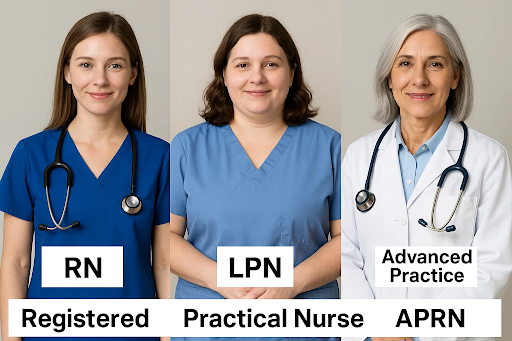
The Alaska Board of Nursing, under the Division of Corporations, Business and Professional Licensing, regulates three main categories:
- Registered Nurse (RN): For those with an associate (ADN) or bachelor’s (BSN) degree, handling complex patient care.
- Licensed Practical Nurse (LPN): Entry-level role with a practical nursing diploma, focusing on basic care under supervision.
- Advanced Practice Registered Nurse (APRN): Includes nurse practitioners (NPs), certified nurse midwives (CNMs), and more, requiring a master’s or doctoral degree plus national certification.
All licenses emphasize evidence-based practice and cultural sensitivity, aligning with Alaska’s diverse population.
>>>Check out RN to BSN programs in Alaska<<<
Educational Requirements

To qualify, complete an accredited program:
- RN: Minimum ADN or BSN from a program approved by the Accreditation Commission for Education in Nursing (ACEN) or Commission on Collegiate Nursing Education (CCNE).
- LPN: Diploma from an approved practical nursing program.
- APRN: Graduate degree in your specialty, plus certification from bodies like the American Nurses Credentialing Center (ANCC).
Transcripts must be sent directly to the Board. International applicants may need a credentials evaluation from CGFNS International.
>>>See also MSN programs in Alabama<<<
Step-by-Step: How to Obtain Your Alaska Nursing License
Licensure by Examination (For New Graduates)
If you’re fresh out of school:
- Register for the NCLEX-RN (or NCLEX-PN) via Pearson VUE.
- Submit an online application to the Alaska Board ($375 fee covers app, license, and fingerprints).
- Undergo a criminal background check (CBC) with fingerprints via IdentoGO.
- Pass the NCLEX and await Board approval—licenses are temporary until results are verified.
Pro tip: Apply before testing to expedite processing.
Licensure by Endorsement (For Out-of-State Nurses)
Already licensed elsewhere? Streamline with endorsement:
- Verify your original license via Nursys (if applicable) or direct state Board request.
- Prove 320 hours of nursing employment in the last five years—or meet continuing competency
- Submit application, CBC, and $375 fee.
- If no SSN, file an exception form.
Processing takes 4-6 weeks; track status via your first Board letter.
For APRNs
- Hold an active RN license.
- Provide national certification and graduate transcripts.
Licenses renew November 30 of even years; new licensees get a grace period.
Fees and Processing Times
- RN/LPN by Exam: Application fee: $300; Fingerprint fee: $75; Total initial cost: $375; Processing time: 2-4 weeks.
- RN/LPN by Endorsement: Application fee: $300; Fingerprint fee: $75; Total initial cost: $375; Processing time: 4-6 weeks.
- APRN: Application fee: $300; Fingerprint fee: Included; Total initial cost: $375; Processing time: 4-6 weeks.
Fees are non-refundable. Renewals cost $250 and occur biennially.
Renewal and Continuing Competency
Alaska RN/LPN licenses expire November 30 of even-numbered years—no grace period for lapsed practice.To renew:
- Complete two of these:
- 30 contact hours of continuing education (CE).
- 30 hours in uncompensated professional activities (e.g., volunteering).
- 320 hours of nursing employment in the prior two years.
New licensees (after Dec 1, odd years) skip the first renewal’s proof. Audits are random—keep records for 4 years.
Common Challenges and Tips
- Background Checks: Delays often stem from fingerprints; schedule early.
- Rural Practice: Highlight telehealth experience for endorsements.
- Study Resources: For NCLEX prep or licensure exam practice, uloscah.com is your go-to study guide for nurses, offering comprehensive materials to boost your success.
- Resources: Visit the Alaska Board of Nursing for forms
Alaska Nursing License: FAQs
How Do I Get an Alaska Nursing License
To get a Registered Nurse (RN) license in Alaska, you generally need to:
- Graduate from an approved nursing education program (ADN or BSN).
- Pass the NCLEX-RN examination.
- Submit an application to the Alaska Board of Nursing, including required documentation: official transcripts, license verification if you already hold a license elsewhere, fingerprinting/background check.
- Pay required fees.
If you are licensed in another state, you can apply by endorsement (not by exam). Alaska requires verification of the out-of-state license, possibly proof of recent work experience, etc.
How Long Does It Take to Get an Alaska RN License
- Once you submit a complete application with all required documents, the processing time is typically 4-6 weeks for the initial review.
- If the board requests additional documentation (transcripts, background check, etc.), that can add another 4-6 weeks.
- Temporary permits/licenses may be granted quicker if criteria are met.
So typically, full permanent licensure takes about 6-8 weeks or more, depending on how clean and complete everything is.
What Is the Hardest State to Get a Nursing License In
This is more subjective, but based on reported delays, strict requirements, non-compact status, and volume of applications, some states are often cited as more difficult. Examples include:
- California: Long processing times, stringent documentation / verification, no compact reciprocity.
- New York: Similarly strict, detailed application requirements especially for out-of-state or foreign-trained nurses.
Which state is “hardest” can depend on your background (e.g. domestic vs. foreign training, how complete your documents are, speed of background check etc.)
What State Is Easiest to Get RN
Again, this depends on your circumstances, but a few states are frequently considered among the easier:
- Arizona: Known for relatively fast processing and simpler endorsement or temporary license procedures.
- North Dakota: Sometimes licensing happens in 7-10 business days if everything is in order.
- Alabama, South Carolina are also often mentioned among states with faster/less complex licensure processes.
Final Thoughts: North to Your Nursing Future
Securing an Alaska nursing license isn’t just paperwork—it’s your ticket to a career where every shift could save lives in the Last Frontier. With high pay, low patient ratios, and unparalleled natural beauty, the rewards outweigh the tundra-like bureaucracy. Start your application today, and remember: in Alaska, nurses don’t just care for patients; they pioneer healthcare. For detailed step-by-step guidance and exam prep resources, visit uloscah.com to make your licensing journey smoother.