

Securing a Florida nursing license is a critical step for registered nurses (RNs) and licensed practical nurses (LPNs) who want to work in one of the country’s largest and fastest-growing health care markets. Whether you are new to nursing, relocating from another state, or reactivating a lapsed license, understanding Florida’s licensure requirements will set you up for success.
At uloscah.com, we provide comprehensive nursing resources, including practice exams, licensure guides, and career planning tools to help you navigate the entire licensing process with confidence.
>>>Related Nursing Licensure By State<<<
Test Banks
- Adult Health II: Cardiovascular and Respiratory (NUR 440 B)
- Anatomy and Physiology II (M8) Comprehensive Lecture Exam
- ATI Exit Exam ( ATI Comprehensive Predictor)
- ATI Fluid and Electrolyte Exam
- ATI ADULT HEALTH 1
- ATI Anatomy and Physiology Exam
- ATI Comprehensive Medical Surgical Exam
- ATI Dosage Calculation
- ATI Leadership Exam
- ATI NSG 133 Mental health Exam
Florida Board of Nursing: Key Facts
The Florida Board of Nursing (FBON) is the regulatory body that governs nursing licensure in the state. It sets education and examination standards, approves nursing programs, and oversees license renewal and discipline. Nurses must comply with current FBON rules, which can change, so it’s important to use up-to-date resources.
>>>See also Alabama Nursing License<<<
How to Apply for a Florida Nursing License
Educational Requirements
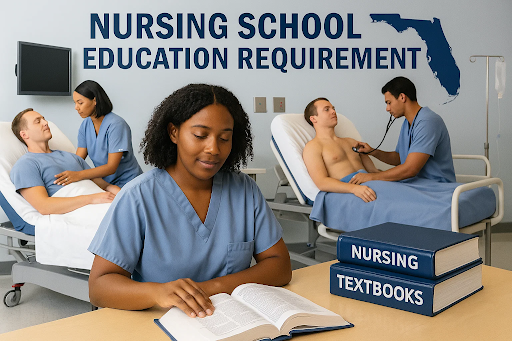
- Complete a nursing education program approved by the Florida Board of Nursing (ADN, BSN, or practical nurse program).
- The program must meet minimum curriculum and clinical hour standards.
Background Check and Fingerprinting
- Submit to a criminal background check.
- Provide fingerprints via an approved vendor.
NCLEX Exam
- Register with Pearson VUE to take the NCLEX-RN (for RNs) or NCLEX-PN (for LPNs).
- Once your education is verified, the Board will authorize your exam.
Apply Through the FBON Portal
- Complete the online application via the Florida Department of Health Health Care Licensing Portal.
- Pay the required application and licensing fees.
- Submit official transcripts and education verification.
Licensure by Endorsement (Transferring to Florida)
If you already hold an active nursing license in another U.S. state, you may apply for a Florida license via endorsement.
Steps to Endorsement:
- Submit your current license verification from your original state’s Board of Nursing.
- Provide proof of education (transcripts) and NCLEX passage.
- Complete a background check.
- Pay the endorsement application fee.
Processing times can vary, but once all verification is complete, you may be issued a Florida license.
>>>Check out Alaska Nursing License <<<
License Renewal in Florida
- Florida nursing licenses must be renewed biennially (every two years) via the FBON.
- Nurses must complete continuing education (CE): 24 hours every renewal cycle, including 2 hours of prevention of medical error, per Board requirements.
- Renewal is done online through the Florida Department of Health portal
>>>See also Arizona Nursing License <<<
Reactivation of Lapsed License
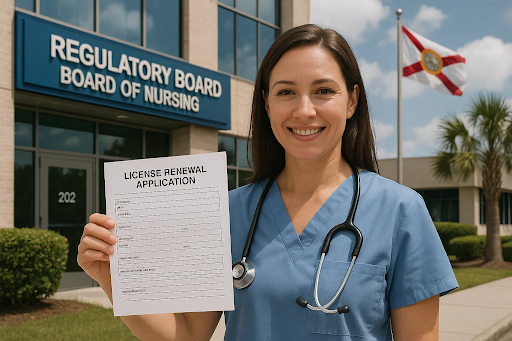
If your Florida nursing license has lapsed:
- You may reapply for reactivation via the FBON portal.
- Requirements often include completing a background check and paying a reactivation fee.
- In some cases, you may need to complete continuing education or a refresher course, depending on how long the license has been inactive.
Florida Nursing License Verification
If you want to verify a nurse’s Florida license status:
- Use the Health Care Licensing Verification system on the Florida Department of Health website.
- Search by name or license number to check whether a license is active, expired, or in a disciplinary status.
Career Outlook & Salary for RNs in Florida
- The demand for RNs in Florida is strong due to a large, aging population and robust healthcare infrastructure.
- According to the Bureau of Labor Statistics, RNs in Florida can expect an average salary that varies significantly by region, experience, and specialization, but typically falls below national averages due to cost of living.
- Earning a BSN or higher increases earning potential, opens doors to leadership and advanced practice roles, and improves job mobility.
Tips for Nursing Students and License Applicants
- Choose an FBON-Approved School: Make sure your nursing school is approved to avoid issues with license eligibility.
- Start the Fingerprint Process Early: Background checks and fingerprint submissions can take time — complete them before graduation.
- Prepare for the NCLEX with Practice Exams: Use uloscah.com test banks and practice exams to strengthen your readiness.
- Track Continuing Education: Keep detailed records of your CE hours to streamline your renewal every two years.
- Budget for Renewal and Reactivation Costs: Licensing, renewal, and reactivation fees add up — plan ahead.
Conclusion
Securing or transferring a Florida nursing license positions you to work in one of the country’s most dynamic healthcare markets. While the process requires careful planning — from education verification and fingerprinting to NCLEX exam preparation and biennial renewal — the rewards are significant: career opportunities, mobility, and leadership roles.
When preparing for your license exam or planning your long-term nursing career, trust uloscah.com for tailored practice exams, licensure insights, and essential nursing resources. Your journey to a successful nursing career begins here.