
Illinois, a major hub for healthcare innovation and academic excellence, offers some of the nation’s most respected Doctor of Nursing Practice (DNP) programs. For BSN and MSN-prepared nurses looking to reach the pinnacle of clinical practice, leadership, and policy, the DNP is the essential next step. This guide explores why an Illinois DNP is a strategic career move, highlights top programs, and addresses key questions about this terminal nursing degree. For the advanced resources and support you’ll need on this journey, be sure to visit uloscah.com.
>>>Check out DNP programs in California<<<
Text Banks
- ATI NUR 109 Final Assessment Exam
- ATI NUR 125 Exam 4
- ATI Nur 130 exam 3 Fall
- ATI NUR 130 Final Exam
- ATI NUR 135 Exam
- ATI NUR 209 Final Assessment
- ATI NUR 211 Final Assessment Fall Exam
- ATI Nur 211 Midpoint Assessment Exam
- ATI NUR 213 Midpoint Assessment
- ATI NUR 250 Summer 1 2025 Midpoint Assessment
- ATI Nursing 130 Exam 2
- ATI Nursing 531 Exam
- ATI Nutrition Practice Exam
Why Pursue a DNP in Illinois?
The DNP degree focuses on translating evidence-based research into practical, improved patient outcomes, moving beyond the traditional master’s degree. For nurses in Illinois, this credential offers significant benefits:
- Clinical Autonomy: The DNP is the standard for advanced practice registered nurses (APRNs), equipping graduates to practice at the highest level of their specialty.
- Leadership Roles: DNP-prepared nurses are highly sought after for executive and leadership positions, such as Chief Nursing Officer (CNO) or Director of Clinical Services, particularly within Illinois’ large hospital systems in Chicago, Peoria, and other major metropolitan areas.
- High Demand: The demand for highly educated APRNs in Illinois remains strong, especially in specialties like Psychiatric-Mental Health (PMHNP) and Adult-Gerontology Acute Care.
- Salary Potential: The average Nurse Practitioner salary in Illinois hovers around $120,000 to $126,000 per year, with DNP holders often commanding salaries at the higher end of this spectrum, particularly in the Chicago metropolitan area.
>>>DNP programs in Colorado<<<
Accredited Programs: The Illinois Leaders
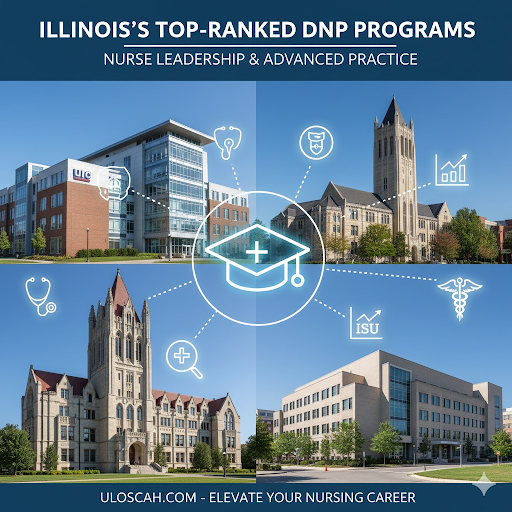
Choosing an accredited program is critical for licensure and career progression. Illinois is home to several top-tier institutions offering DNP programs for both BSN to DNP and MSN-prepared nurses.
- University of Illinois Chicago (UIC) College of Nursing: Renowned for its multiple advanced practice tracks, including Family Nurse Practitioner (FNP) and Adult-Gerontology Acute Care Nurse Practitioner (AGACNP). UIC leverages its extensive network of clinical sites across Illinois.
- Loyola University Chicago (LUC) Marcella Niehoff School of Nursing: Offers DNP tracks in both Advanced Practice and Systems Leadership, grounded in Jesuit values and focusing on ethical, holistic care.
- Rush University College of Nursing: Consistently top-ranked nationally, Rush offers DNP programs with a strong emphasis on clinical research and collaborative healthcare leadership.
- Illinois State University (ISU) Mennonite College of Nursing: Provides a flexible, comprehensive BSN to DNP pathway, often with a focus on primary care and rural health.
Flexible Learning: Online and Hybrid Options

Modern DNP programs recognize the need for flexibility for working nurses. Many Illinois schools offer online and hybrid models, making it possible to earn your degree without relocating or sacrificing your current career.
- Online BSN to DNP Programs: Several institutions, including Lewis University and Bradley University, offer fully or mostly online BSN to DNP options, which are especially popular for the FNP and Nurse Administrator tracks. These programs blend online coursework with concentrated campus visits and local clinical placements.
- Hybrid Models: Schools like UIC and Loyola often use a hybrid format, delivering core coursework online while requiring minimal, strategically scheduled on-campus sessions for intensives, simulations, and project work.
Pathways to the DNP
The admission pathway for the Doctor of Nursing Practice (DNP) depends entirely on your current educational level:
BSN to DNP
- Previous Degree Required: Bachelor of Science in Nursing (BSN).
- Typical Duration: 3.5 – 5 years (Full-Time).
- Clinical Hours: $\ge 1,000$ post-BSN.
- Focus: Advanced Practice Specialization (e.g., Nurse Practitioner, CRNA, Midwife).
MSN to DNP
- Previous Degree Required: Master of Science in Nursing (MSN).
- Typical Duration: 1.5 – 2 years (Full-Time).
- Clinical Hours: Varies (often topping up to 1,000 total hours).
- Focus: Clinical Leadership, Executive Management, or Specialty Refinement.
Accreditation and Quality Assurance
When selecting an Illinois DNP program, ensure it holds accreditation from one of the following recognized bodies:
- Commission on Collegiate Nursing Education (CCNE)
- Accreditation Commission for Education in Nursing (ACEN)
Accreditation verifies that the program meets rigorous national standards for curriculum, faculty, and clinical experience, which is essential for obtaining your state APRN license.
>>>Check out DNP programs in Arkansas<<<
Admission Requirements
While specifics vary by institution, general requirements for DNP programs in Illinois typically include:
- Current RN Licensure: Active, unencumbered Registered Nurse (RN) license in Illinois or a compact state.
- Degree: A BSN from a CCNE- or ACEN-accredited program for the BSN-to-DNP path, or an MSN for the post-Master’s path.
- GPA: A minimum GPA of $3.0$ on a $4.0$ scale is standard, with competitive programs often requiring $3.4$ or higher.
- Clinical Experience: Most advanced practice tracks require one to two years of recent, relevant clinical experience.
- GRE/MAT: Some programs, particularly post-BSN, may require a Graduate Record Examination (GRE) or Miller Analogies Test (MAT) score.
Future Outlook and Practice Authority
Illinois is a state with Full Practice Authority (FPA) for Nurse Practitioners who meet specific experience and certification requirements. This means DNP-prepared NPs can:
- Diagnose and treat patients.
- Order and interpret diagnostic tests.
- Prescribe medications.
The DNP degree strongly positions you to meet the education criteria necessary to achieve FPA, ensuring a future of maximum clinical independence and impact in Illinois healthcare.
Uloscah.com: Your Path to Advanced Nursing

For resources, study materials, and connecting with a community focused on advancing nursing practice in Illinois, be sure to visit uloscah.com. We provide insights, mentorship connections, and tools specifically tailored to support your journey from RN to DNP-prepared leader.
>>>See also DNP programs in Alabama<<<
DNP Programs in Illinois: FAQs
How Much Does a DNP Make in Illinois?
The average DNP-prepared Nurse Practitioner in Illinois can expect to earn between $120,000 and over $140,000 annually, depending on their specialty, years of experience, and location (with Chicago often offering higher salaries).
How Many Years Does It Take to Get a DNP?
A BSN-to-DNP program typically takes 3.5 to 5 years of full-time study. An MSN-to-DNP program generally takes 1.5 to 2 years of full-time study.
What Is the Highest Paid DNP Nurse?
The Certified Registered Nurse Anesthetist (CRNA) is consistently the highest-paid APRN role, with salaries in Illinois averaging well over $200,000. Other high-paying DNP specialties include Neonatal Nurse Practitioner (NNP) and Psychiatric-Mental Health Nurse Practitioner (PMHNP).
Which DNP Program Is Best?
The “best” program depends on your specialty and location needs. Nationally recognized and top-tier clinical programs like Rush University and the University of Illinois Chicago (UIC) are highly regarded, especially for research and complex acute care tracks.
Do DNP Get Called a Doctor?
Yes, DNP holders have a doctoral degree and may be addressed as “Doctor” in academic or non-clinical settings. However, in a clinical setting, many nurses choose to clarify their title as “Doctor [Last Name], DNP” to avoid confusion with medical doctors (MDs/DOs).
>>>Nursing Licensure By State<<<
Conclusion
A Doctor of Nursing Practice degree from an Illinois institution is an investment in your future, preparing you for clinical leadership, policy development, and the highest level of patient care. With flexible online BSN to DNP options and highly-ranked programs like Loyola University Chicago and UIC, the path to becoming a DNP-prepared nurse in the Prairie State is clearer and more accessible than ever. For the resources you need to succeed in your doctoral coursework and scholarly project, rely on uloscah.com.